

Latest Posts
- Morlaye Book 1 Transcribed
- A Test
As a break from transcribing I tried to get the transcribed music sounding a lot better so I can listen to it to practise to (I learn much better by hearing the music rather than reading sheet music). Below is an example of what the default midi sound is, and below that is what I have managed to do with Logic Pro. My wonderful partner, who knows a lot more about medieval and renaissance dances than I do, isn’t here to help with the tempo so I just used the default speed in MuseScore (I think its about 120 bpm). If people are interested I can probably do this for other pieces as well (now that I finally know how to share them here, apparently just uploading it as an mp3 doesn’t work unless I give WordPress money that I don’t have).
- Orphenica Lyra
Also I finished transcribing Orphenica Lyra, you can find it on the sidebar.
I actually finished transcribing it a while ago I just needed to upload it and only remembered to do that now.
Enjoy!
- The breffe and playne instruction to lerne to play on the gyttron and also the Cetterne
Only a fragment of this book exists (which I have included both here and on the Original Facsimiles page). It was originally published by Adrien Le Roy as an instructional guide on playing the renaissance guitar. This version is a translation of that book into English, published by James Rowbotham in 1568. Hopefully more gets found, but sadly this is all that remains of the book.
- New book transcribed!
I have finished transcribing Le Roy’s 5th book, it is on the sidebar if you want to download it. I hope I transcribed it accurately and I help at least one musician with their music.
- Latin terms in French Music
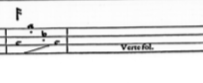
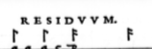
This isn’t going to be a long post but it is something I have discovered while transcribing Le Roy’s 5th book (which I am hoping to have finished by Friday so I can print it and bring it with me to an SCA event on Saturday). A lot of the chansons (which just translates to “songs” but it means a specific type of song that is sung along to as opposed to being just played for pleasure or to be danced to) are arranged so that the lyrics and tune are on one page and the guitar tablature is on the other. When a chanson is too long to fit on one page there is the text “Verte fol.” which, in French, apparently translates to “Green page” (I am not sure what fol. is short for but it is the word for a two page spread in a book) which seemed incorrect. It turns out that Verte is actually Latin for “turn” so Verte fol. actually means “Turn the page”. On the top of the next page there is the text “RESIDUUM” where the title, composer or type of song would go. Apparently this is also Latin and means “The Remainder”. I haven’t run into any more Latin (yet) but I will absolutely share my findings if I run into any more.
- What I have learned so far while transcribing all this music
Since starting this project I have learned a lot about old music notation and I want to share some of the things I have learned in hopes that it helps other people learn too.
- Dots below notes mean that you play that note with a finger, and diagonal lines mean you play sustain the note. I am planning on including both these notations in future transcriptions once I figure out how to do it in Musescore.
- Time signatures are not standardised between composers or even within work from the same composer. Cut time (a C with a vertical line through it) is the same as in modern notation (2 minims per bar) but for songs with 3 beats in a bar there is just the number 3 (or a C with a line through it followed by a 3), and you have to count how many notes are in the bar to find out if they mean 3/4, 3/2 or even 3/1.
- With Mudarra’s work he used the time signature as a representation of tempo, with
 (a circle with a vertical line through it) meaning fast or allegro and
  (a C with no line through it) meaning medium or moderato. In his other work a C with a vertical line through it is used to mean slow or largo.
- With Mudarra’s work he used the time signature as a representation of tempo, with
- Besides Mudarra’s work none of the other pieces have tempos (which is the main thing that has stopped me from making mp3 and midi files of every song) so I have no idea how fast any of them are meant to be (besides dances like Pavanes and Gaillardes and Bransles because I am primarily a dance musician and can also ask dancers how fast songs should be)
- Repeats weren’t directional, meaning you couldn’t write a “repeat back to this bar” without a repeat on the previous bar. A way that composers got around this was with an old form of D.S. al Fine, which was a weird symbol (
 or
or ) that marked where you would repeat back to (or from), and you would play until you reached either the Fin. or the end of the piece. Sometimes the symbol is on the tablature with the notes, either to save printing space or to just be annoying.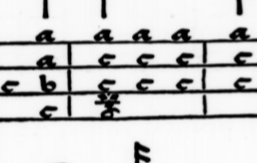
- Some songs are tuned in FCEA instead of GCEA. The two ways I have found of notating when a song is in FCEA is “Temple Viejo” (which is Spanish for “old tuning”) and “A corde avallée” (which, according to google translate, means “lowered rope” in Corsican, which I am assuming means lowered string).
- NOTE: I found this out after notating other songs and didn’t know what “A corde avallée” meant so I wrote “Vieux Temple” which is a French translation of “Temple Viejo”. This is incorrect and I will try and replace the old files with an updated version that says “A corde avallée” instead of “Vieux Temple”.
- Fermatas are used more to signal the end of a song instead of “hold this note twice as long” as it is used in modern notation, and it also replaces the symbol for the note length.
Hopefully some of this has been helpful, please feel free to contact me if you have any questions or corrections.
- Le Roy/Brayssing Book 4 finished!
I have finished transcribing Le Roy/Brayssing book 4 and it is now on the sidebar. Please contact me if you are having any trouble with the files or if there are any errors. Enjoy!
- An update on Brayssing/Le Roy Quart livre
I have almost finished transcribing the fourth book in Le Roy’s series of music for 4 course guitar (which has music composed by Gregoire Brayssing in it). There are only 2 songs left (although they are both very long and my hand is cramping so I will try to do them tomorrow).
- Staff Notation and other Updates
I have now updated each book I have transcribed (so far) with staff notation alongside the French and Italian notations, and have also made all pdfs available on the page for each book as opposed to being in a google drive folder (the musescore file is still in google drive because I can’t upload it to wordpress). Hopefully this is helpful to some people!


mil gracias por toda tu labor, soy un aficionado a la música renacentista y gracias a tus transcripciones puedo tocar estas antiguas canciones. Un cordial saludo desde Buenos Aires, Argentina.
LikeLike
Un grand Merci pour tout ce travail, les morceaux sont très beaux et cela aide beaucoup d’avoir l’exemple sonore . Si les transcriptions n’existaient pas, il me serait impossible de jouer ces mélodies très agréable . Est ce que vous allez continuer votre travail de transcription ? J’espére que oui car cela est très utile et trés précieux .
Dominique de France
A big thank you for all this work; the pieces are beautiful, and having the audio example helps a great deal. Without these transcriptions, it would be impossible for me to play these delightful melodies. Do you plan to continue your transcription work? I hope so, as it is incredibly useful and valuable.
LikeLike
Merci beaucoup! I have been struggling a bit with mental health the past few years, but I absolutely intend to finish transcribing everything (or at least the rest of Morlaye’s published work). I am very glad that this little project has helped so many people around the world!
LikeLike